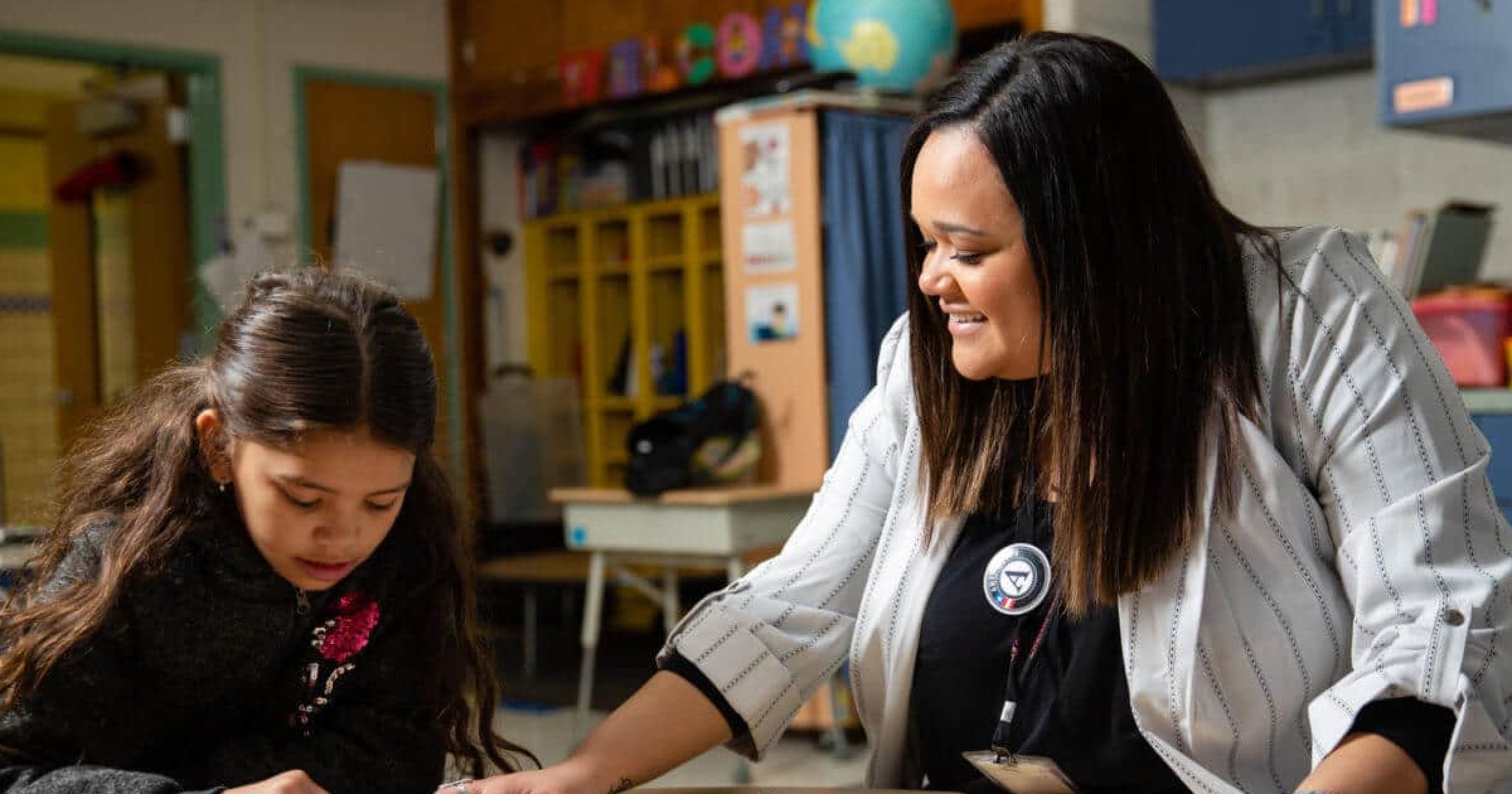

Reading Instruction For Kids Who Need It Most
Reading Assist provides high-impact tutoring for students in grades K-3 in the lowest 25% for reading proficiency, with a focus on serving in schools where there is the highest need.
We recruit, train, and embed AmeriCorps members – known as Reading Assist Fellows – willing to commit a school year of service to provide our accredited, one-on-one intervention program to struggling readers.
We believe no child should struggle when success is within reach.
0
Students served by Reading Assist
0%+
Students who reach foundational reading benchmarks annually
0x
Our students’ rate of progress over what’s expected